
Over the last decade, numerous studies comparing the effects of barefoot and shod running on biomechanics have been published, with contradictory data.
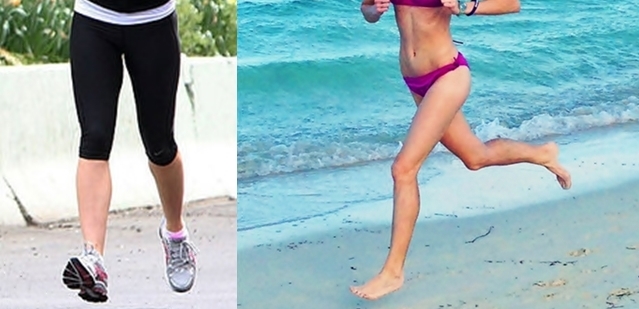
Some studies have found that biomechanics improved with barefoot running while others demonstrated that wearing running shoes reduced biomechanical impairments such as excessive tibial rotation.
Interestingly, studies of which found barefoot running to improve biomechanics over shod-running, had provided instruction on proper barefoot running technique to the participants, which included landing with a forefoot strike, not a heel strike as most shod runners.
More importantly, foot strike type was clearly defined -barefoot runners were forefoot strikers, shod runners were heel strikers. Knowing this type of information gives runners more insight on the relationship between foot strike, footwear, and injury.
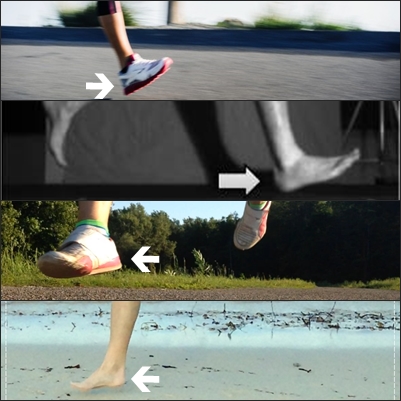
In contrast, most of the study’s that reported opposite results, i.e. biomechanics did not improve with barefoot running, often fail to define foot strike type of the participants. And, shod runners (who were probably heel strikers) were told to run barefoot without explicit instruction on the proper barefoot running technique.
Therefore, chances were, heel striking was maintained in the barefoot runners, but the reader does not know that which is just one symptom of a general failure to integrate scientific knowledge of barefoot running into biomechanics.
- for instance, a study by Fukano et al. found that footwear reduced tibial rotation compared to barefoot running, but foot strike type was undefined
- this type of research is of weak scientific validity because a big piece of the injury prevention puzzle was missing: were the participants heel strikers, or forefoot strikers?
Now, I am left with many vital, unanswered questions: was tibial rotation greater in the barefoot runners because heel strike was maintained, or did these runners adopt a forefoot strike without proper instruction which led to an increase in tibial rotation? And, looking at the big picture: was it barefoot running that caused an increase in tibial rotation, or was it barefoot running with a heel strike that caused tibial rotation?
We need to know how these runners were striking the ground to fairly assess if shod running is safer than barefoot running and why. Bottom line, runners need a trusted source to tell fads and fallacies of barefoot running from proved methods.
More Run Forefoot:
Regards for this post, I am a big fan of this website would like to continue updated.
I’ve been exploring CBD or sleep gummies thc an eye to a while, and this article in fact resonated with my own experience. CBD has helped me lodge cool-headed, snore well-advised, and manipulate stress in a natural way without that distressful or “foggy” feeling. I’ve tried oils, gummies, and full-spectrum blends each works differently depending on the moment. The timbre for me was consistency and quality: in the good old days I switched to biotic, lab-tested brands, the results became more noticeable. It’s not a magnetism cure, but it can be a palpable help for loony make up for and fuselage recovery.
**gluco6**
gluco6 is a natural, plant-based supplement designed to help maintain healthy blood sugar levels.