
A heel strike landing represents the greatest force in running, according to Dr. Uffe Jorgensen. Heel strike running generates greater body-shock as well as collision, braking, and transient forces compared to forefoot running.
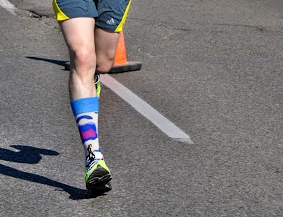 The body-shock of heel strike running exerts damaging pathophysiological effects on the body and is directly related to body loads where as shock increases, active shock absorption in the muscles increases and so does the risk of injury.
At heel strike, the magnitude of the body-shock ramps up active shock absorption in the muscles at the expense of greater oxygen consumption and therefore energy expenditure.
Jorgensens et al., investigated the effects of a heel counter on reducing injury in heel strike runners via reducing muscle loads where muscle load was expressed by oxygen consumption.
Side note: A heel counter is a form of external support in the heel of a non-minimalist running shoe which affects shock absorption and stability at heel strike.
Intriguingly, the researchers found that oxygen cost of running increased when the heel counter was removed, contradicting past work which found that weight reduction of a shoe reduced the oxygen cost of running. That is, the lighter the shoe, the lesser the oxygen consumption, the greater the running efficiency, but not in this study.
Why did removing the heel counters cause the heel strikers to be less economical?
The heel strikers were less efficient without the heel counters because the body was trying to adapt to the increase in body load due to the body- shock at heel strike.
The researchers suggested that the heel strike body-shock increased oxygen consumption due to increased eccentric muscle action and joint flexion (i.e. adaptation) in response to the increase in body loads.
This is how overuse injuries occur: an energy crisis arises resulting in fatigue when the magnitude of the body-shock exceeds the absorptive capacity of the musculature during heel strike running.
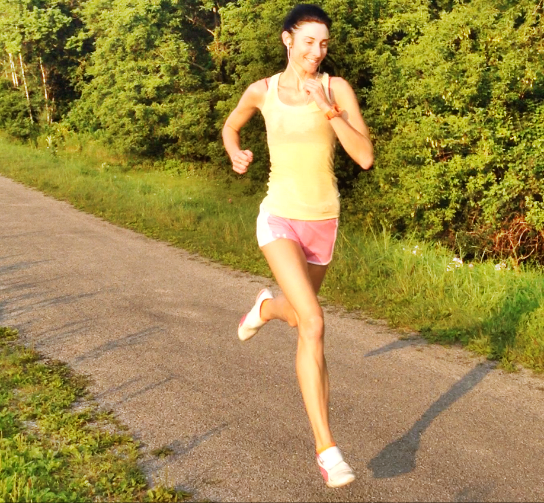 To remedy the high impact nature of heel strike running, you must run with less shock.
More studies are adding to mounting evidence for the effectiveness of forefoot running in injury prevention.
Forefoot running has been found to have a net benefit on the body: less shock, less pain, less muscular work for shock absorption, and therefore less injury.
More From Run Forefoot:
- Forefoot Running: A Potential Strategy to Treat Shin Splints
- Forefoot Runners May Run Safer on Any Surface, Regardless of Surface Hardness
- Heel Strikers Wanting to Switch to Forefoot Running, But Are Afraid of Injury
- Alberto Salazar: Run Like a Sprinter to be a Great Distance Runner
References:Jorgensen, U. (1990). Body load in heel strike running: The effect of a firm heel counter.
I’ve been exploring CBD or sleep thc gummies for a while, and this article in reality resonated with my own experience. CBD has helped me interrupt cool-headed, sleep well-advised, and control emphasis on in a natural approach without that distressful or “foggy” feeling. I’ve tried oils, gummies, and full-spectrum blends each works differently depending on the moment. The guide for the treatment of me was consistency and quality: conclusively I switched to visceral, lab-tested brands, the results became more noticeable. It’s not a magnetism mend, but it can be a palpable support after intellectual stabilize and fuselage recovery.